 YAN
Product discovery and design
OneTool. A product around the service provider
OneTool grew out of an ecosystem connecting retailers, homeowners and service providers. The design challenge was to bring that fragmented experience around the people doing the work: independent professionals running their own service businesses.
In short
- The problem
- An ecosystem connecting retailers, homeowners and service providers needed a clearer centre of gravity.
- My part
- As a Product Designer, I contributed to discovery, the value proposition, user flows and prototypes with product, engineering, marketing and business colleagues.
- The key decision
- Organise the experience around the service provider: a public profile to win work, and a private workspace to follow orders, notifications and finances.
- Contribution
- Product Designer
- Project status
- Historical product-design work
- Period
- 2021
Original archived product, brand and process presentations.
- Present services
- Receive requests
- Follow the work
My contribution
As a Product Designer, I contributed to discovery, the value proposition, user flows and interface prototypes, working with product, development, marketing and business colleagues.
Find the centre of the product
The earlier ecosystem served several audiences. The archived project brief describes difficulties with scalability, acquisition and payments happening outside the platform. The direction was to consolidate the product experience and make service providers its central audience.
That choice gave discovery a practical question: how could the product support a professional’s everyday business? The scope needed to account for presenting services, receiving requests and following the work, alongside the business’s own goals.
My contribution included user research and personas, shaping the value proposition, and developing flows and prototypes with the cross-functional team. The emphasis was on connecting the business direction to a recognisable product experience for the service provider.
Give each side of the work a clear place
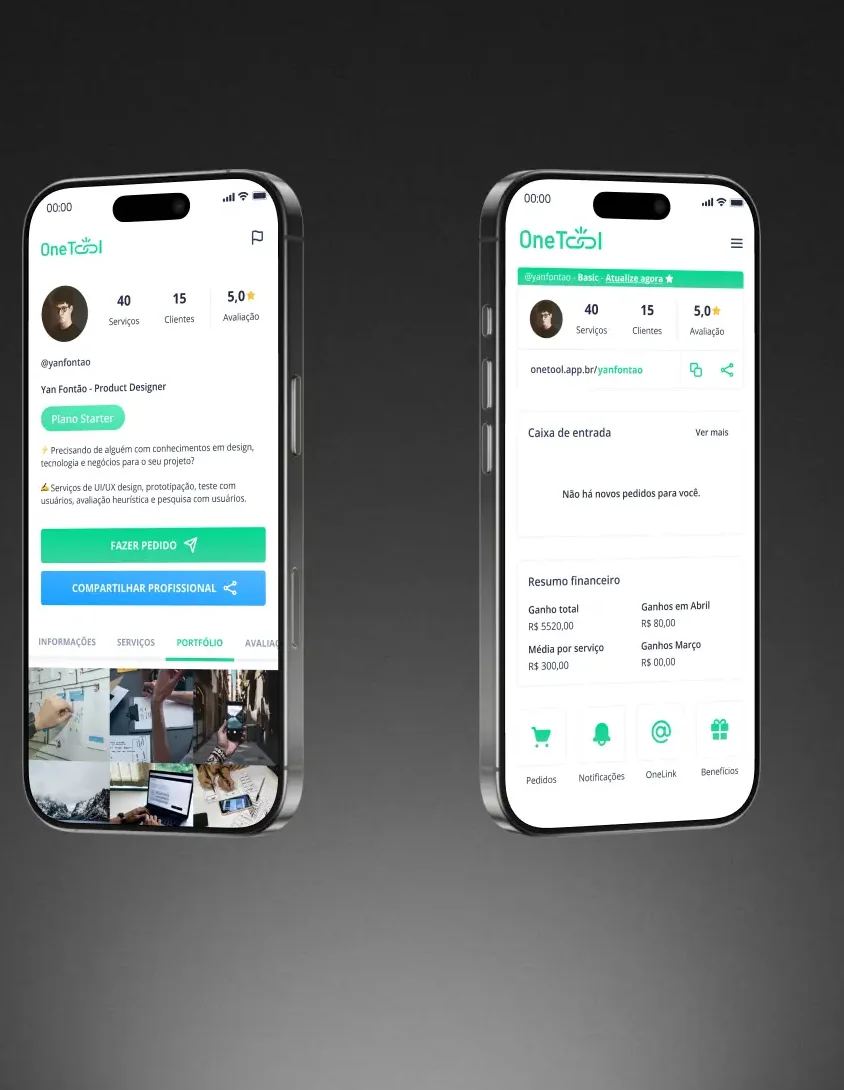
The preserved interface designs show two related surfaces. A public profile lets a professional present services, a portfolio and reviews. The private home brings orders, notifications and a financial summary into the professional’s own workspace.
The public profile is designed to be shared. Its actions make requesting a service and sharing the professional visible, while tabs organise the information someone may want to inspect first. OneLink gives the professional a reusable entry point into that presence.
Inside the workspace, an inbox and financial summary place incoming work and business activity together. The distinction between the public profile and private home makes the audience of each screen clear. One helps a potential customer understand the professional; the other helps the professional follow their business.
Use the product direction to guide the details
The provider-first direction influenced more than the navigation. It connected the professional’s identity, service presentation and operational view in one product story. A portfolio was part of selling a service; orders and financial information belonged to managing that service.
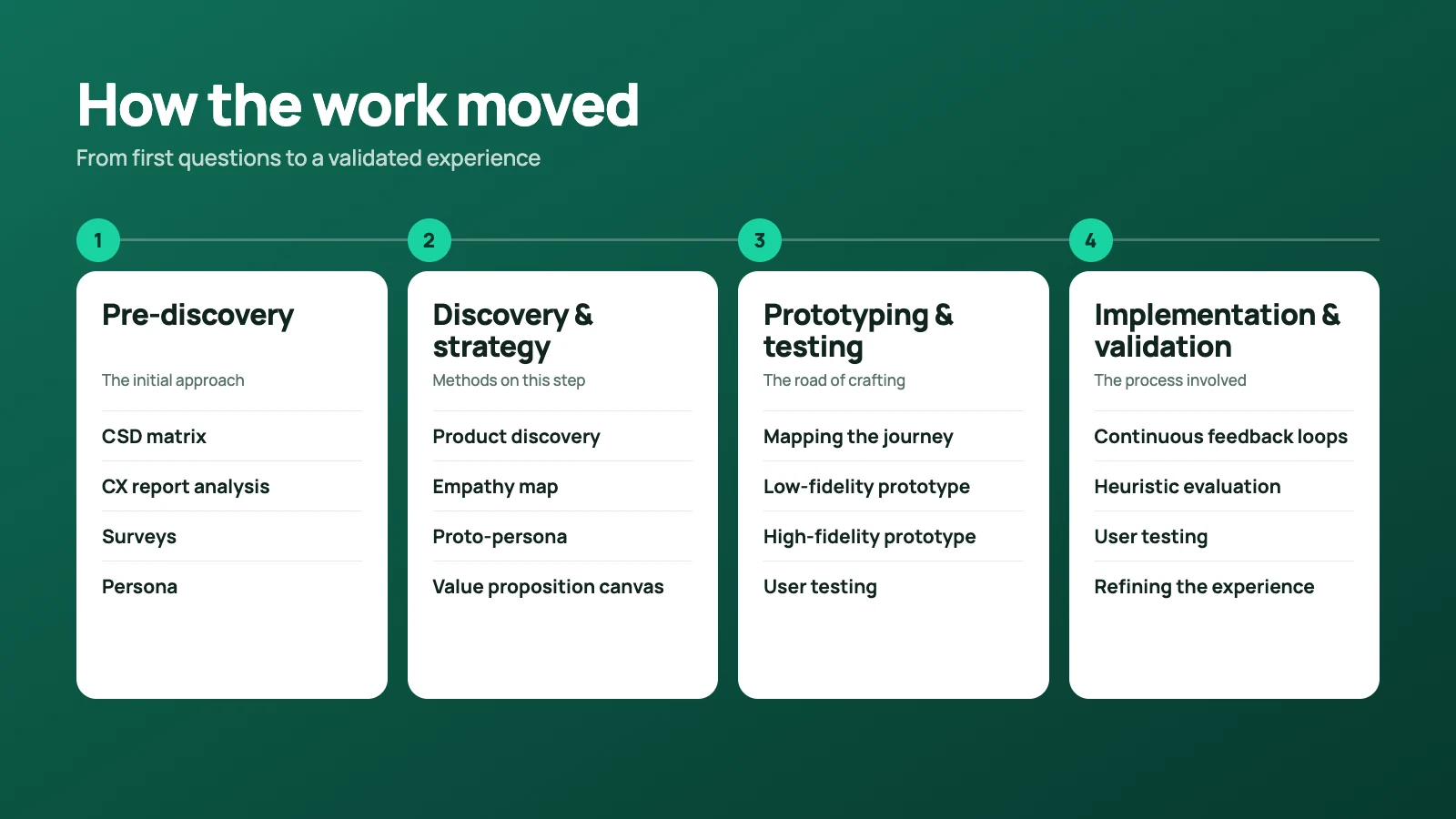
The process materials record discovery and strategy work followed by flows, low- and high-fidelity prototypes, user testing, internal feedback and heuristic review. These artifacts show how the project moved between defining the product and examining its interface.
Product managers helped establish priorities and the features to explore. Developers brought feasibility constraints. Marketing and business colleagues contributed the market context. The design work connected those perspectives through a shared value proposition and prototype.
What the work demonstrates
The case shows a shift in product focus expressed through concrete surfaces: a shareable professional profile and a private workspace for running the business. It connects discovery, information architecture and detailed interface design around one audience.
The preserved prototypes and process artifacts are the basis for this case. They show the direction of the work and the decisions behind the interface.